
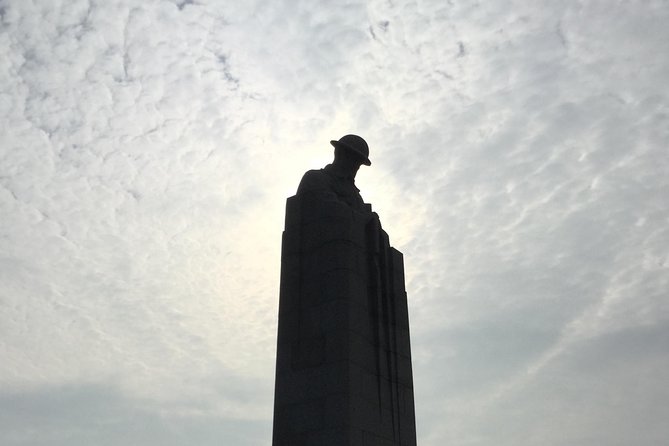
REVIEW · BELGIUM
From LIlle or Bruges, Christmas Truce to Passchendaele Ypres 1 day WW1 private
The most striking part of this day is how much ground you cover without losing the human story. You move from the Christmas Truce at Messines to Australian positions at Passchendaele, then on to Tyne Cot, John McCrae’s hospital site, and the Menin Gate. Soren brings clear, careful storytelling to places that can otherwise feel hard to read.
I especially like the private format, which lets you ask about a family name, regiment, or battle without holding up a busload of people. I also like the mix of famous sites and rough, original trenches at Sanctuary Wood. The drawback is the price, $532.32 per person, and lunch is not included, so this makes the most sense for people who value expert guidance and easy transport.
Key points to know before booking
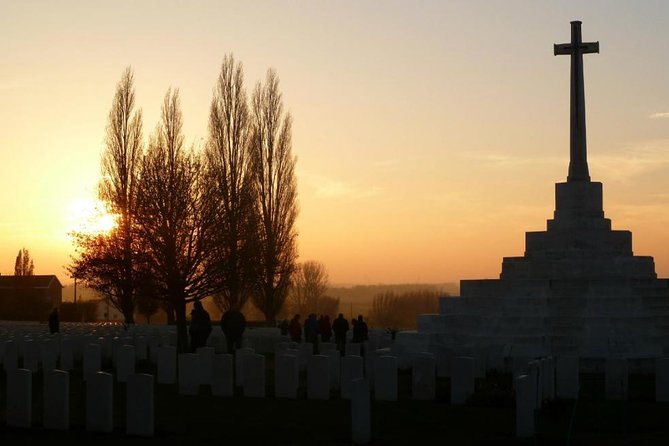
- A full Ypres Salient day: The tour runs about nine hours and links major battle sites across the region.
- Private pickup from a wide area: Collection is available from Bruges, Lille, Arras, Ghent Dampoort Station, and hotels or B&Bs within 66 kilometers of Ypres.
- Strong Australian focus: Much of the day follows Australian actions at Polygon Wood, Passchendaele, Hill 60, and the Menin Road.
- Important underground warfare sites: You see major mine craters at Messines and Hill 60, including the crater made by the 1st Australian Tunnelling Company.
- A serious remembrance experience: Tyne Cot, the Menin Gate, and John McCrae’s site bring the human cost of the war into sharp focus.
- Useful for family research: The private setup allows the route to be adjusted if your relatives served in this part of Belgium.
A long day built around the Ypres Salient
This is not a quick stop in Ypres followed by a museum visit. It is a moving circuit through the old Ypres Salient, the area where British, Australian, and other Allied forces fought through repeated offensives from 1914 to 1918.
You start at 9:00 a.m. and spend roughly nine hours on the road and at the sites. That matters because these battlefields are spread across several towns and villages. A private vehicle saves you from trying to piece the route together by train, taxi, or local bus, and your guide can explain what you are seeing as the scenery changes.
The day has a clear Australian thread. You follow the line of the Australian advance through Zonnebeke and the Menin Road, with stops at Polygon Wood, Hill 60, and Passchendaele. That focus is particularly useful if your family story involves Australian forces, though the route also covers broader British and Commonwealth events.
Soren is the guide named for this experience. His style is described as informed, thoughtful, passionate, and willing to answer questions. He also brings a light sense of humor, which can help during a day filled with difficult subjects. Expect explanation rather than a quick list of dates and names.
More Private Christmas Tours in the world:
- New York City Christmas Lights Private Horse Carriage Ride
★ 4.5 · 237 reviews - Christmas Lights Tour of Madrid in Eco Tuk Tuk Private
★ 5.0 · 125 reviews - Christmas in New York: Private Holiday History Tour
★ 5.0 · 107 reviews
Messines Ridge and the Christmas Truce
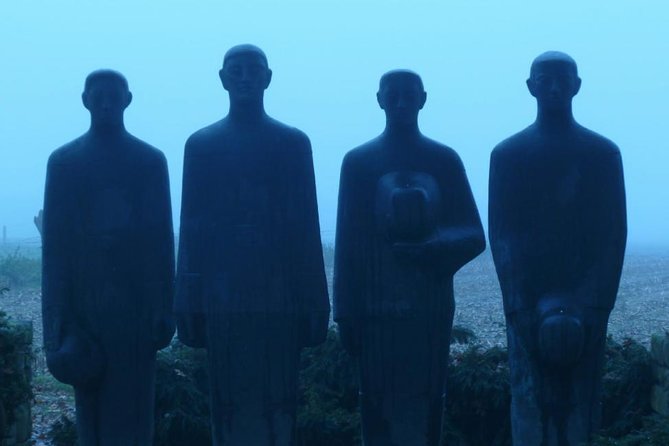
The opening stop at Messines Ridge lasts about two hours, making it one of the most substantial parts of the day. You hear about the Battle of Messines, see the mine craters, and visit the area connected with the Christmas Truce.
The Messines mines are a useful introduction to the scale and method of First World War fighting. The ground was not simply crossed by soldiers. It was tunneled beneath, packed with explosives, and attacked from below. The craters make that underground war easier to picture than a battlefield map ever could.
The Christmas Truce adds a very different human note. It is often reduced to a sentimental story about soldiers meeting in no-man’s-land, but standing in the area gives your guide room to explain the setting and limits of the event. You should expect history with context, not a polished holiday tale.
This stop also includes the crypt where Adolf Hitler was treated for wounds. That detail connects the First World War to later European history, but it should not overshadow the men who fought and died here. The site is best understood as one thread in a much larger story.
With two hours here, Messines is not treated as a photo stop. Wear shoes suitable for uneven ground, since the day includes outdoor sites, cemetery paths, and trench areas.
Hooge Crater Cemetery and the Menin Road
Hooge Crater Cemetery is a short, 15-minute stop, but it carries several useful connections. You visit the grave of Pat Bugden VC, a 20-year-old recipient of the Victoria Cross, and stand on the Menin Road near the former Australian gun pits used in the assault on Passchendaele.
The short timing means this is a focused visit rather than a long cemetery walk. Your guide can point out the grave, explain Bugden’s Victoria Cross, and connect the cemetery to the nearby road and artillery positions.
The Menin Road itself is important because it was both a route and a military objective. Standing beside it helps you understand how roads shaped movement, supply, and attack. The reference to Australian gun pits makes the location more tangible than a general explanation of the offensive.
Another nearby site marks the former Australian headquarters in September 1917. You also hear about earlier fighting on the same ground in November 1914. That layering is one of the strengths of the tour. The same patch of Belgium was fought over more than once, and the guide helps you separate the events instead of treating the whole area as one battle.
Polygon Wood and the Australian advance
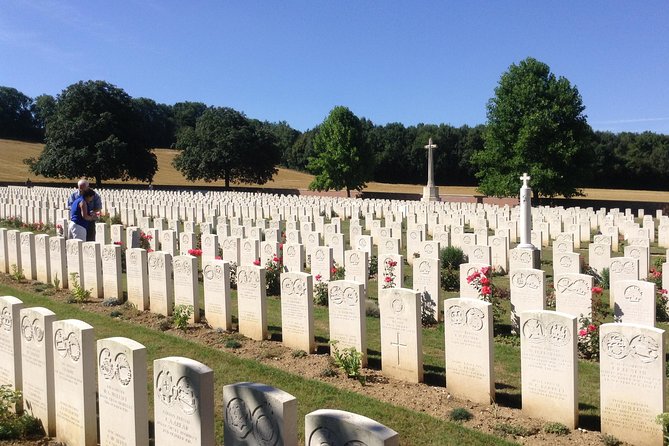
At Polygon Wood, you spend about 30 minutes walking through the woods, visiting surviving concrete bunkers, the cemetery, and the Australian 5th Division monument.
The bunkers are among the most useful physical remains on the route. Even when a battlefield has been absorbed into farmland or woodland, reinforced concrete positions show how troops tried to survive artillery fire. You can look at the structure and understand that this was not an open field battle in the old-fashioned sense.
The cemetery and division monument add names and units to the setting. I like this combination because it links three scales of the war: the individual soldier, the military formation, and the ground itself.
Thirty minutes is enough for a guided look, but not for a slow, detailed visit to every grave. If you have a particular family connection to the 5th Division or Polygon Wood, tell Soren when booking or at the start of the day. The private format gives the tour room to follow that interest.
A few more festive trips around the world worth a look
- Auckland: Hobbiton Movie Set Day Trip with Festive Lunch
★ 4.8 · 1,431 reviews - London Christmas Day 1 Day Hop-on Hop-off Bus Tour
★ 4.0 · 15 reviews - One day tour Christmas markets Innsbruck – Bressanone – Vipiteno
★ 4.5 · 11 reviews - Small-Group Christmas Day Trip to Hallstatt from Vienna
★ 5.0 · 5 reviews
Hill 60 and the mine that changed the ground
Hill 60 gets about 45 minutes. Here the focus turns to Captain Woodward and the 1st Australian Tunnelling Company, who placed a large mine beneath the position. The explosion took place at 3:10 a.m. on June 7, 1917, and you see the crater created by it.
This is one of the clearest examples of how the tour turns military engineering into something you can see. The crater is not just a mark on a map. It shows how much force was used to break a fortified position and how profoundly the ground was altered.
The story of the tunnellers also gives the battle a human scale. Mining required dangerous work underground, often in cramped and unstable conditions, while opposing tunnellers tried to listen for and disrupt the enemy. Your guide’s explanation is important here because the visible crater alone cannot tell you why it exists.
The 45-minute stop should give you time to hear the account and look around without rushing. As with Messines, outdoor footwear is sensible. The route combines walking with vehicle travel, so you will want to balance comfort with protection from uneven surfaces.
Tyne Cot, the largest Commonwealth cemetery
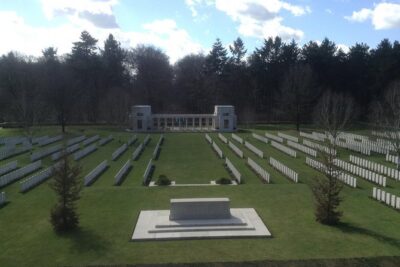
Tyne Cot Cemetery is one of the emotional centers of the day. About 12,000 soldiers are buried here, and the cemetery also records thousands of missing men whose bodies were never identified or recovered. The tour points out two Australian Victoria Cross recipients among those buried here.
The scale can be difficult to absorb. A figure such as 12,000 is abstract until you walk among row after row of headstones. Your guide can help connect the cemetery to Passchendaele and explain why so many men ended up here.
The distinction between known graves and names of the missing matters. A marked headstone tells you that a body was identified. A name on a memorial tells you that the person disappeared into the battle and was never given a known grave. Tyne Cot brings both forms of loss together.
You have about 45 minutes here. That is enough for a meaningful visit, though you may want longer if you are researching a family member. Tell Soren ahead of time if you have a name, unit, or date. The tour can be tailored when family history is tied to this region, but you should not assume that every individual record can be located during the day.
John McCrae and In Flanders Fields
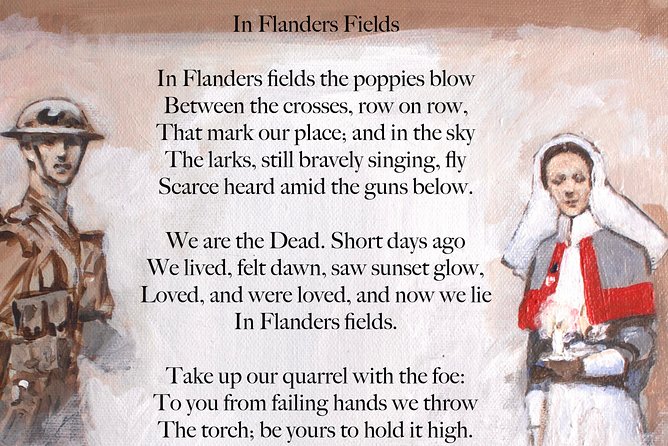
The John McCrae site receives about 30 minutes. You visit the hospital area where Lieutenant Colonel John McCrae composed In Flanders Fields, one of the best-known poems associated with the First World War.
This stop works because it connects a familiar piece of writing with the practical setting where it was created. The poem is often encountered in ceremonies or books. Seeing the hospital site gives you a stronger sense of the conditions surrounding it.
The stop is not presented as a separate literary excursion. It forms part of the day’s larger movement from battlefield to cemetery to remembrance. After the scale of Tyne Cot, McCrae’s poem gives a more personal voice to the dead and the people treating the wounded.
Thirty minutes is a sensible amount of time for the site. It lets you hear the story and reflect without turning the visit into a long pause in an already full itinerary.
The Menin Gate and the missing
The Menin Gate Memorial is the final major memorial stop, with about 20 minutes set aside for its story. The gate carries the names of 55,000 missing men, a number large enough to feel almost unreal until you stand beneath the memorial and see the names arranged around you.
Your guide explains how the memorial came about and shares some of the stories behind those names. That personal detail matters. A memorial can become architectural background if nobody explains who it commemorates and why the names are there.
The timing here is brief, so you should treat it as an introduction rather than a full study of the memorial. If you are able to stay in Ypres afterward, the Last Post ceremony may be worth arranging separately. One of the strongest practical tips from this experience is to ask about staying for it if your schedule allows. The tour itself does not promise that the ceremony is included.
The Menin Gate also gives the day a fitting end. You have seen the places where men trained, attacked, were wounded, and were buried. Here, many of those who have no known grave are remembered by name.
Sanctuary Wood and original trenches
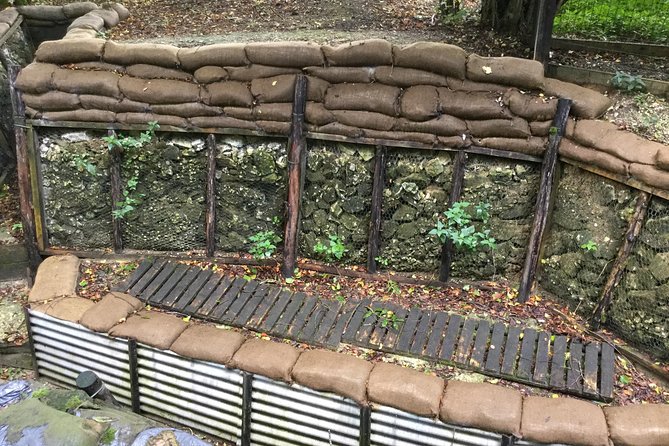
Sanctuary Wood Museum is the only stop listed with an admission charge included in the tour. You spend about 40 minutes there and see original First World War trenches.
These trenches are valuable because they show the confined, defensive side of the war. Cemeteries and monuments tell you about loss and remembrance. Trenches show the daily setting in which soldiers waited, moved, sheltered, and endured bombardment.
The museum gives the day a physical ending. After visiting craters, roads, woods, cemeteries, and memorials, you see the kind of position that tied these sites together. Forty minutes is enough for a guided visit, though anyone fascinated by trench construction may wish for extra time.
The experience does not present every museum in the Ypres area. Its strength is the route itself, with selected sites chosen to explain the main battles and the Australian advance. If you want a full day inside museums, this is not that kind of tour.
What the $532.32 price buys you
At $532.32 per person, this is an expensive day if you are traveling alone. The price becomes easier to justify for a small private group, especially when the vehicle, hotel pickup, guide, and route planning replace several separate transport arrangements.
The tour lasts about nine hours and can collect you from hotels or B&Bs within 66 kilometers of Ypres. Pickup is also offered from Lille and Arras in France, Ghent Dampoort Station, and Bruges. That wide pickup area is useful if Ypres is not your overnight base.
Bottled water is included, but lunch is not. Plan for that gap before departure. The supplied details do not specify a restaurant stop, so ask when booking if you need a planned meal break.
The private format is the main value. You are not simply paying to be driven between famous names. You are paying for a guide who can connect Messines, Passchendaele, Hill 60, Tyne Cot, and Ypres in one coherent day, then adjust the conversation for your interests.
Who should book this Ypres day
I would choose this tour if you have one day for the Ypres area and want the battlefield story explained in person. It suits people with family connections, military history interests, and anyone who prefers a focused private day to a large scheduled group.
It is especially useful if you are staying in Bruges, Lille, Ghent, or Arras and do not want to arrange multiple connections. Pickup and drop-off remove much of the practical work.
You should think twice if you prefer to explore at your own pace, spend hours at one cemetery, or focus mainly on museums. The route covers a lot of ground, and several stops have set time limits. The price is also harder to justify for a solo visitor without a strong interest in the subject.
The tour is offered in English. Most people can participate, and service animals are allowed. It is a private activity for your group only, with confirmation sent within 48 hours of booking if space is available.
Should you book it?
Book this tour if you want a serious, personal introduction to the Ypres Salient and value a guide who can explain what happened at each site. Soren’s detailed approach, the Australian focus, and the chance to tailor the day for family history make it more useful than simply ticking off memorials.
I would not book it for a casual sightseeing day or a cheap way to reach Ypres. At $532.32 per person, the cost demands genuine interest. For a small group with nine hours to spare, hotel pickup, and a wish to understand Messines, Passchendaele, Tyne Cot, and the Menin Gate as connected events, it can be a very worthwhile choice.
FAQ
How long is the tour?
The tour lasts approximately nine hours.
What time does the tour start?
The scheduled start time is 9:00 a.m.
Where can pickup be arranged?
Pickup is available from hotels or B&Bs within a 66-kilometer radius of Ypres. Pickup points also include Ghent Dampoort Station, Lille in France, and Arras in France.
Is the tour private?
Yes. Only your group participates in the private tour.
What language is the tour offered in?
The tour is offered in English.
Who guides the tour?
The named guide is Soren, from A Foreign Field WW1 Tours.
Is lunch included?
No. Lunch is not included. Bottled water is included.
Which important cemeteries and memorials are visited?
The route includes Hooge Crater Cemetery, Tyne Cot Cemetery, the Menin Gate Memorial, and a cemetery at Polygon Wood.
Are entrance fees included?
The listed admission ticket for Sanctuary Wood Museum is included. The other listed stops have no admission ticket charge.
Can the tour be adapted for family history?
Yes. The tour can be tailored if you have family history connected to the region.
Can I cancel for a full refund?
Yes, if you cancel at least 24 hours before the experience starts. Cancellations made less than 24 hours in advance are not refunded, and changes within that period are not accepted.
Just added around the world
- Würzburg: Brückenschoppen Winter Edition (guided tour with mulled wine)★ 4.7 · 14 reviews
- Würzburg in winter: the Residenz, old town, and mulled wine★ 5.0 · 2 reviews
- Washington, DC: Christmas Tree & Holiday Lights Bus Tour★ 4.5 · 4 reviews
- Windsor, Bath, Stonehenge & Salisbury with Christmas Lunch★ 4.3 · 3 reviews
- Wroclaw: Private 1h Christmas River Cruise★ 5.0 · 2 reviews
- Visit the authentic Christmas market in Obernai★ 3.0 · 3 reviews
- Vienna: Festive Season and New Year’s Eve Waltz Workshop★ 5.0 · 3 reviews
- Wien: Tour with locals on the trails of the Christmas Tree★ 4.6 · 7 reviews
Belgium Christmas Tours, compared.
From Ypres, The Christmas Truce to Passchendaele Ypres Based WW1 private tour
Read our review →
Brussels Private & Personalized Christmas Tour with a Local Guide
Read our review →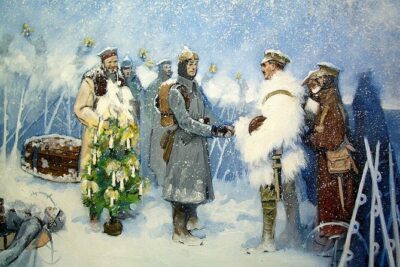
From Ypres 4hr Christmas Truce and Monster Mines of Messines PRIVATE Tour
Read our review →
Christmas Market Magic Walking Tour with a Local
Read our review →
Discover the magic of Christmas in Brussels with a local guide
Read our review →
Christmas Magic in Bruges – Private Walking Tour
Read our review →
Browse the lists this tour appears in