
REVIEW · BELGIUM
From Ypres, The Christmas Truce to Passchendaele Ypres Based WW1 private tour
The most moving part of this Ypres tour is how it connects famous battles with small, human details. At Messines Ridge, you hear about the Christmas Truce, stand near the crater made by a huge 1917 mine, and visit the crypt where Adolf Hitler was treated for wounds. Later, at Tyne Cot, the scale changes completely: nearly 12,000 Commonwealth soldiers are buried there, while thousands more are listed as missing.
I like two things right away. Søren’s personal research can connect the day to your own relatives, and the private format lets you ask questions without holding up a busload of strangers. I also like the variety: cemeteries, woods, bunkers, trenches, mine craters, memorials, and battlefield roads all appear in one long day. The main drawback is the price, $420.49 per person, and the eight-hour schedule may feel heavy if military history is not your main reason for visiting Ypres.
Key points to know before booking
- Follow the Christmas Truce at Messines Ridge: See the area linked with the 1914 truce, the Messines mine craters, and Hitler’s wartime treatment site.
- Walk through Polygon Wood: Original concrete bunkers, a cemetery, and the Australian 5th Division monument give this stop a strong physical sense of the fighting.
- Stand at Hill 60: Hear how Captain Woodward and the 1st Australian Tunnelling Company placed the mine blown at 3:10 a.m. on June 7, 1917.
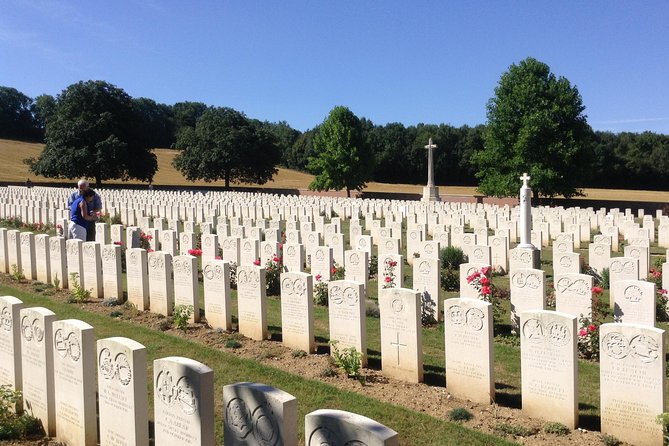
- Visit Tyne Cot Cemetery: See the largest Commonwealth War Graves Commission cemetery in the world, with about 12,000 burials and 55,000 missing names remembered at Menin Gate.
- Shape the day around your family: Søren can adjust the tour to your knowledge and interests, including research into relatives connected with the Ypres area.
- Expect a private English-language day: Pickup is offered from Ypres-based locations, with a minimum of two guests and bottled water included.
Why a private Ypres battlefield tour helps
You can drive around the Ypres Salient on your own, but the ground is not always easy to read. Fields and roads have changed, towns have been rebuilt, and many wartime positions are marked only by a cemetery, a bunker, or a low rise in the soil. A guide gives those places their military and human context.
That matters most at sites such as Messines Ridge and Hill 60. Without explanation, a crater can look like an old pond and a wooded path can seem like an ordinary walk. With Søren, you get the story of what happened below and above ground, who fought there, and why the place mattered.
The private setup is especially useful if you have a family connection. Several parts of the day can be adapted to your relatives, nationality, or preferred level of detail. One couple received help tracing a great-grandfather’s service from landing through his death. Another pair asked to include South African graves, and the guide added that focus to the day.
This is not a quick sightseeing circuit. It is a full day with several stops and plenty of driving between them. You will get more from it if you enjoy asking questions, reading names, and pausing at sites that require time to absorb.
More Private Christmas Tours in the world:
- New York City Christmas Lights Private Horse Carriage Ride
★ 4.5 · 237 reviews - Christmas Lights Tour of Madrid in Eco Tuk Tuk Private
★ 5.0 · 125 reviews - Christmas in New York: Private Holiday History Tour
★ 5.0 · 107 reviews
Messines Ridge and the Christmas Truce
The tour begins at Messines Ridge, where you spend about two hours hearing the story of the Battle of Messines. This is one of the strongest opening stops because it combines several very different subjects: the mine war, the 1914 Christmas Truce, and the wartime treatment of Adolf Hitler.
The mine craters are the physical stars here. They show the destructive force of underground warfare and help explain why Messines mattered to the British and Australian forces. Your guide’s explanation is important because the crater alone cannot tell you how the attack was prepared or what it meant for the soldiers above ground.
You also visit the scene linked with the Christmas Truce. The subject can easily become sentimental, but the value of a guide is that the story is placed within the wider war rather than treated as a charming interruption. You hear about the ground, the opposing armies, and the strange contrast between informal contact and the fighting that resumed.
The crypt where Hitler was treated for his wounds adds another layer. It is a surprising detail, and it gives the site a connection to a later chapter of European history. Plan on spending real time here. The two-hour stop is much longer than the brief cemetery visits later in the day.
Hooge Crater Cemetery and the Menin Road
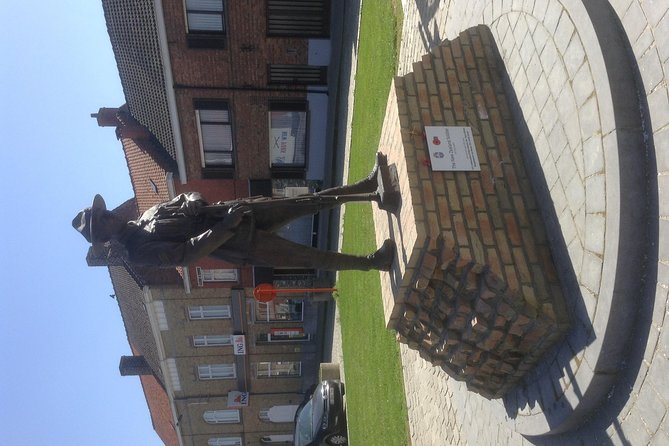
Hooge Crater Cemetery is a short stop of about 15 minutes, but it links personal courage with a major Australian route. You hear about Pat Bugden VC, who was only 20 when he received the Victoria Cross.
You also stand on the Menin Road beside the area where Australian gun pits were positioned for the assault toward Passchendaele. This is useful because it connects a cemetery name to the movement of troops and artillery. The road was not just a route on a map. It was part of the machinery that moved men, ammunition, and guns toward the front.
The stop is brief, so you will not have time for a long independent visit. I would treat it as a focused explanation rather than a chance to wander.
The Black Watch and Polygon Wood
At The Black Watch site, Søren explains the Australian headquarters position in September 1917 and earlier actions on the same ground in November 1914. The two dates help show how the same patch of country could matter again and again as the front shifted.
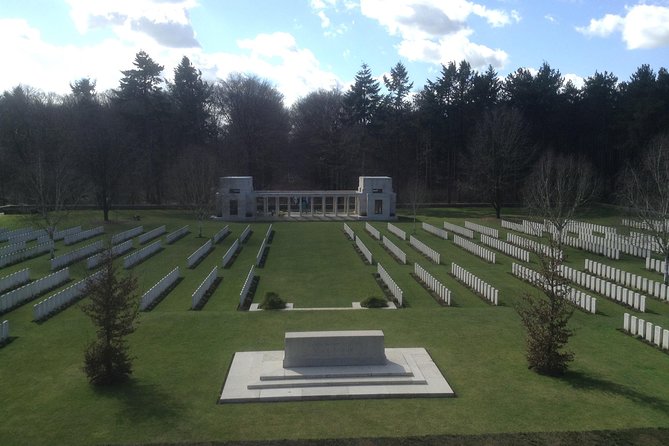
Polygon Wood gives you more time on foot, about 30 minutes. You walk through the woods, see concrete bunkers that remained from the fighting, visit the cemetery, and stop at the Australian 5th Division monument.
This is one of the better parts of the tour for anyone who wants to see something tangible. Cemeteries are carefully maintained and formal. Bunkers are rough, practical, and stubbornly present. In the woods, those two kinds of evidence sit close together.
The walking is not described as demanding, but you should still wear sensible shoes. The stop is short, so do not expect a long hike through the area. Its strength is the combination of a walk, surviving structures, a cemetery, and a national monument in one compact visit.
A few more festive trips around the world worth a look
- London: Christmas Lights Bus Tour With Live Guide
★ 4.0 · 5,410 reviews - From Manhattan: 4-Hour Dyker Heights Holiday Lights Bus Tour
★ 4.6 · 2,426 reviews - London by Night Bus Tour with Christmas Lights and Live Guide
★ 4.5 · 2,040 reviews - Auckland: Hobbiton Movie Set Day Trip with Festive Lunch
★ 4.8 · 1,431 reviews
Hill 60 and the mine blown at 3:10 a.m.
Hill 60 is one of the tour’s key stops, with about 45 minutes devoted to it. Here you hear about Captain Woodward and the 1st Australian Tunnelling Company, which placed the large mine detonated at 3:10 a.m. on June 7, 1917.
The crater gives the story a clear physical anchor. You are not only hearing about an operation hidden underground. You are seeing the ground that was changed by it.
This is another place where a guide adds real value. The engineering, timing, and danger of tunnelling warfare are difficult to understand from a passing visit. Søren’s account gives the site a human scale, particularly through the story of the people who worked below ground.
The 45-minute stop is long enough for an explanation and a look around without turning the day into a difficult walking tour. If underground warfare interests you, this may be one of your favorite sections.
Broodseinde, Zonnebeke, and the Australian advance
Broodseinde and Zonnebeke are mainly viewed while driving through the line of the Australian advance. These sections provide movement and context between the more formal stops.
That may sound less exciting than a cemetery or bunker, but it helps you understand the distance between places. The day is not a collection of isolated attractions. You are following the route taken by Australian forces through the Ypres Salient, and the drive ties the sites together.
Do not expect a long stop in either place. Their value comes from Søren’s commentary and from seeing how the individual battle sites relate to one another.
Tyne Cot Cemetery and the cost of Passchendaele
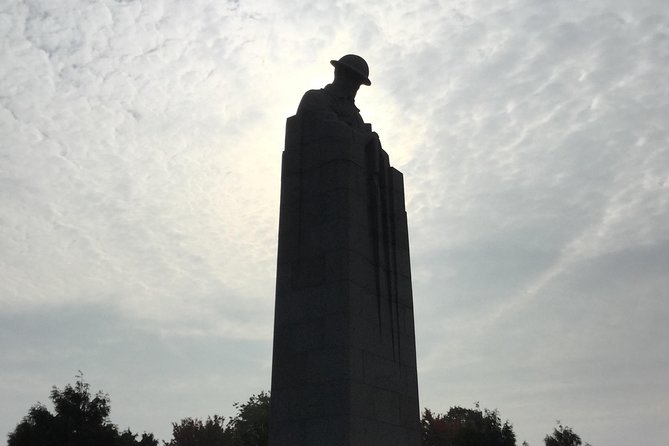
Tyne Cot Cemetery receives about 45 minutes, and it is likely to be one of the day’s most solemn visits. It is the world’s largest Commonwealth War Graves Commission cemetery, with around 12,000 soldiers buried there. Only about 3,000 of those graves have identified names, a stark reminder of how many men remain unknown.
Two Australian Victoria Cross recipients are buried at Tyne Cot. That detail brings individual acts of courage into the same space as the much larger record of loss.
The cemetery is carefully ordered, but the numbers are difficult to take in. I find that a guide helps you move from statistics to individual stories. If you have a relative connected with the area, tell Søren before the tour or at the start of the day. His research into family members is one of the most useful features of this private format.
Forty-five minutes is enough for a guided visit, though you may wish for more time if you want to read many individual inscriptions. The schedule has to keep moving, so this is not a leisurely cemetery afternoon.
John McCrae’s site and In Flanders Fields
The John McCrae stop lasts about 30 minutes and focuses on the hospital site where Lieutenant Colonel John McCrae composed In Flanders Fields.
This visit adds a literary and emotional thread to the military story. The poem is familiar to many people, but seeing the place associated with its composition gives the words a more direct connection to the front.
The stop is not presented as a separate literary tour. It works best as a pause in the wider day, linking the medical side of the war with the memorial culture that developed afterward.
Menin Gate and 55,000 missing names
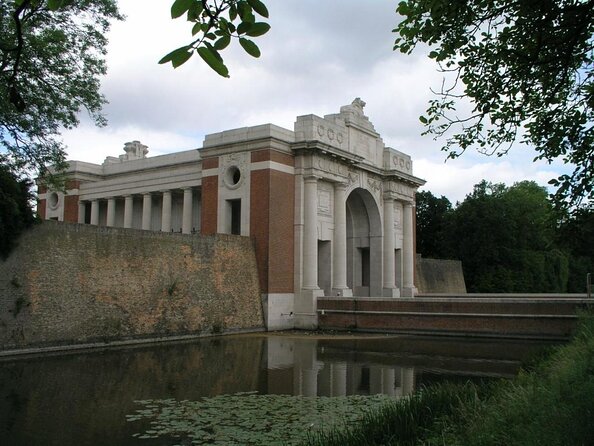
At Menin Gate, you spend about 20 minutes hearing how the memorial came about and learning about the 55,000 names of missing soldiers recorded there.
This is one of Ypres’s best-known monuments, but the short visit keeps the focus on its purpose rather than its architecture alone. The names are the important part. They represent soldiers who have no known grave, making the memorial different from the cemeteries visited earlier.
Because the stop is brief, listen closely to the explanation and allow yourself a quiet moment. You may want to return independently later if you have more time in Ypres, but the guided visit gives you the essential context.
Sanctuary Wood Museum and original trenches
The final listed stop is Sanctuary Wood Museum, with about 40 minutes to see original World War I trenches and a small museum.
This is a useful ending because it gives you a close look at the physical conditions of trench warfare. The cemeteries are polished and formal. Here, the trenches and museum offer a more immediate sense of the cramped, rough spaces soldiers occupied.
The museum admission is included, as is the trench visit. This is the one part of the day where you should expect to spend time indoors as well as outside.
The word museum can suggest a large institution, but the description points to a quaint, modest collection. That may suit you if you prefer personal objects and a direct site connection to a large exhibition hall. If you want a major museum with extensive displays, this tour is not built around that kind of attraction.
Price, pace, and what you receive
The cost is $420.49 per person, with a minimum of two guests. For a couple, that means roughly $840.98 before lunch. That is a serious price, but the comparison is not simply with a self-guided drive.
You are paying for an eight-hour private day, an English-speaking professional guide, pickup from select Ypres-based hotels, bottled water, transport between scattered sites, and a route that covers the Christmas Truce, Passchendaele, Australian actions, major cemeteries, Hill 60, John McCrae, and Menin Gate.
The value is strongest if you have a family connection, a strong interest in the First World War, or limited time in Ypres. It is less convincing if you only want a short introduction to the area or prefer to explore at your own speed.
Lunch is not included, so plan for that practical detail. The start time is 9:00 a.m., and the tour lasts about eight hours. Pickup is for Ypres-based locations only. If you need to start in Lille, Arras, or Bruges, a different tour option is required.
Free bottled water is included, a small but welcome touch on a full day. The tour is offered in English, and service animals are allowed. Most people can participate, though the schedule includes cemetery visits and walking through woods and trench areas.
The activity has a 4.9 rating from 29 reviews and is recommended by 97 percent of customers. Those figures fit the tour’s strongest qualities: personal attention, strong subject knowledge, and a guide who can tailor the day rather than repeat a fixed speech.
Who should book this Ypres tour?
I would choose this tour if you want the battlefield explained, not simply pointed out. It is particularly well suited to families tracing relatives, Australians and other national groups with connections to the fighting, and anyone who wants both the major sites and less obvious details.
You should also book it if you value flexibility. Søren can adjust the depth of the history to your background, answer questions as they arise, and research family names connected with the area. Follow-up links about books, films, podcasts, and specific places have also been provided after tours, which is useful if the day sparks further research.
I would hesitate if you dislike a full schedule, have little interest in military history, or need a budget tour. The route covers a lot of ground, and some stops are short. You will spend time driving between locations, though that travel helps explain the Australian advance.
Should you book it?
Book this private Ypres tour if you want a serious, personal look at the First World War sites around Messines, Passchendaele, and the Ypres Salient. The best reason to pay the higher price is not the number of stops. It is the chance to connect those stops to people, units, dates, and family stories.
If your visit is built around a relative who fought or died here, tell Søren before the day begins. That is where this experience can become more than a battlefield circuit. If you want a quick overview or a low-cost outing, choose a shorter group option instead.
FAQ
Where does the tour begin?
The tour begins with pickup from Ypres-based locations at 9:00 a.m. A minimum of two guests is required.
How long does the tour last?
The experience lasts approximately eight hours.
Is the tour private?
Yes. Only your group participates, and the tour can be customized to your interests and level of WWI knowledge.
Is the tour offered in English?
Yes. The tour is offered in English and is led by Søren of A Foreign Field WW1 Tours.
Is lunch included?
No. Lunch is not included in the tour price.
What is included in the tour?
Bottled water and admission to the trench museum at Sanctuary Wood are included. Pickup from select Ypres-based hotels is also offered.
Can I cancel the tour?
You can cancel up to 24 hours before the start time for a full refund. Changes or cancellations made less than 24 hours before the start time are not accepted, and the tour may be canceled if its minimum number of guests is not reached.
Just added around the world
- Würzburg: Brückenschoppen Winter Edition (guided tour with mulled wine)★ 4.7 · 14 reviews
- Würzburg in winter: the Residenz, old town, and mulled wine★ 5.0 · 2 reviews
- Wroclaw: Private 1h Christmas River Cruise★ 5.0 · 2 reviews
- Washington, DC: Christmas Tree & Holiday Lights Bus Tour★ 4.5 · 4 reviews
- Windsor, Bath, Stonehenge & Salisbury with Christmas Lunch★ 4.3 · 3 reviews
- Visit the authentic Christmas market in Obernai★ 3.0 · 3 reviews
- Vienna: Festive Season and New Year’s Eve Waltz Workshop★ 5.0 · 3 reviews
- Wien: Tour with locals on the trails of the Christmas Tree★ 4.6 · 7 reviews
Belgium Christmas Tours, compared.
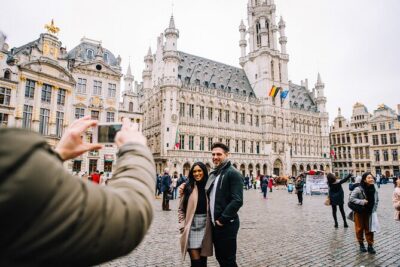
Brussels Private & Personalized Christmas Tour with a Local Guide
Read our review →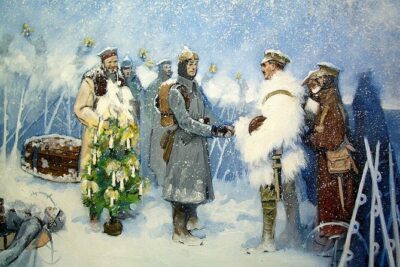
From Ypres 4hr Christmas Truce and Monster Mines of Messines PRIVATE Tour
Read our review →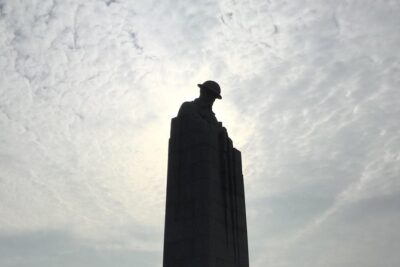
From LIlle or Bruges, Christmas Truce to Passchendaele Ypres 1 day WW1 private
Read our review →
Christmas Market Magic Walking Tour with a Local
Read our review →
Discover the magic of Christmas in Brussels with a local guide
Read our review →
Christmas Magic in Bruges – Private Walking Tour
Read our review →
Browse the lists this tour appears in