
REVIEW · TOKYO
Celebrate Unique Japanese New Year Tradition Culture Festivity
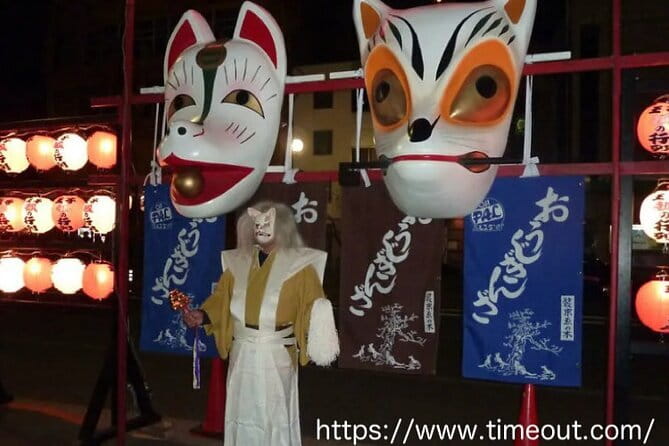
Oji’s New Year celebration is no ordinary countdown. It reaches back to a local fox legend, with more than 200 people carrying yellow lanterns through the night as foxfires on their way to Oji Inari Shrine. The fox procession is the main event, but the evening also includes three shrines, sake education, a tasting, and an izakaya meal.
I like the way this experience connects folklore with a real neighborhood festival, rather than keeping you in a show made only for visitors. I also like the practical all-you-can-drink setup, five kinds of snacks, and a host who can explain what you are seeing. The main concern is group size: one account described more than 50 people, despite the stated maximum of 30, and found the crowd awkward around the shrines.
Key points to know before booking
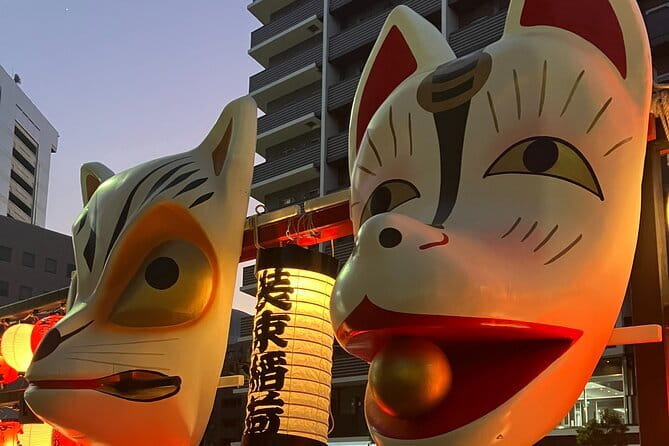
- The fox pageant is the centerpiece: Yellow lanterns, fox masks, kimono, fox makeup, traditional dances, and a lion dance create the New Year spectacle.
- Three shrines come before the party: Your host leads you through local religious sites and explains their place in the celebration.
- Sake is treated as more than a drink: A sake sommelier explains brewing before you taste five varieties with snacks.
- The price covers drinks and food: At $106.74 per person, alcoholic drinks, soft drinks, and izakaya snacks are included.
- The meeting point is simple: Start at the north entrance of JR Oji Station, and return there at the end.
- Check the start time carefully: The supplied details say 8:30 am, while the experience is described as a New Year’s Eve evening ending near midnight.
Why Oji’s fox folklore makes this New Year event different
Tokyo has no shortage of New Year customs, but Oji offers a story with a clear local flavor. According to the legend, foxes from across the region came to Oji Inari Shrine on New Year’s Eve. In the darkness, their lanterns were said to resemble foxfires.
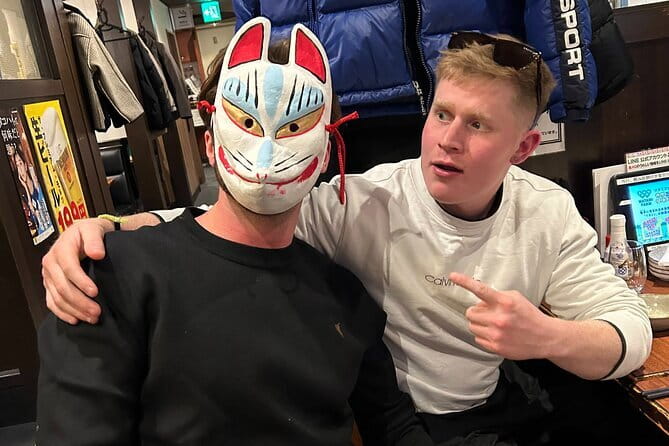
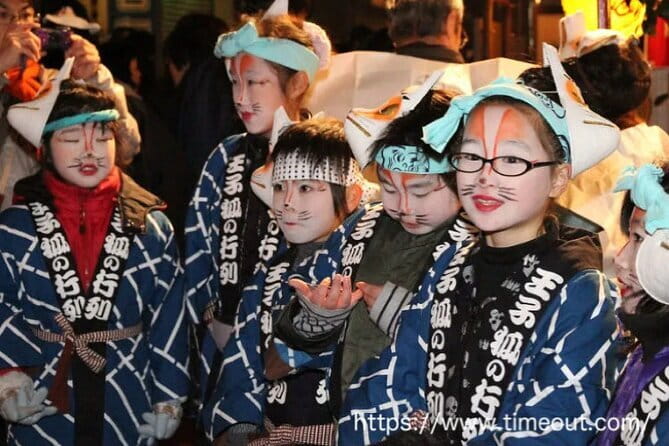
That tale was later captured in ukiyo-e artwork by Utagawa, helping preserve the image of foxes gathering for the New Year. Local people then created the Oji Fox Pageant around the idea. Today, the procession gives the story a physical form: people dress in kimono, wear fox masks or fox makeup, and carry yellow lanterns.
You are not simply watching fireworks or waiting for a clock to strike twelve. You are seeing a neighborhood festival built around a piece of folklore. That distinction matters. The best part of the night is likely to be the feeling that you have reached a local tradition with its own symbols, music, and route.
The pageant includes more than a walking parade. Traditional dances are part of the finale, including a powerful lion dance. The supplied details do not specify the exact performance length or viewing location, so keep your expectations flexible. You will be taken to the starting point of the procession, but the precise view you get may depend on the crowd.
More New Year Celebrations in the world:
- Vienna: Christmas & New Year’s Concert in St. Peter’s Church
★ 4.6 · 763 reviews - Christmas and New Year Concert at St. Peter’s Church in Vienna
★ 4.5 · 155 reviews - Madeira: New Year’s Eve Fireworks by Catamaran
★ 4.4 · 72 reviews
Meeting your host at JR Oji Station
The tour begins at the north entrance of JR Oji Station, at 1-chōme-10-18 Ōji, Kita City, Tokyo 114-0002. This is a sensible meeting point for an evening based in Oji, and the station gives you a clear place to get your bearings.
Your Japanese host leads the walking portion and takes you to three local shrines. No guide name is provided, so you should not expect a named specialist. You can expect a host who explains the customs and helps connect the shrine visits to the night’s fox theme.
Wear shoes you can walk in comfortably. The experience lasts about three hours, but New Year’s Eve crowds can make short distances feel slow. You may also spend time standing during the procession and dances.
One important detail needs checking before you reserve. The tour information gives a start time of 8:30 am, yet the program describes an evening izakaya visit followed by a countdown to midnight. Those details do not match. Confirm the actual meeting time with OMAKASE before the date, especially because the listed duration is only about three hours.
Three shrines and the meaning of a Japanese New Year
The first part of the experience visits three local shrines. Shrine visits are especially fitting at New Year, when people in Japan traditionally visit shrines to pray for good fortune in the year ahead.
The route gives you more than a quick stop at the final procession. You get time to see several religious sites in the Oji area and learn how they fit into the local celebration. For a first visit to Japan, this is useful context. Shrine etiquette can feel unfamiliar, and a host can help you understand what you are seeing without leaving you to guess.
At the same time, you should keep the scale in mind. This is a group outing, not a quiet private walk. One account described a group of more than 50 people and felt that the size made the shrine visits uncomfortable, with the group taking over parts of the area. The operator replied that it had worked with local tourism associations and the event committee and that local organizers welcomed international interest.
The stated maximum is 30 people, which would be a much more manageable size than the reported group of more than 50. Still, this is the clearest point to verify before booking. A large group can make it harder to hear explanations, stay together, or approach a shrine respectfully.
Sake brewing, five snacks, and a relaxed izakaya stop
After the shrine visits, the group moves to a cozy izakaya. This is where the experience becomes more social and informal. Instead of stopping for a rushed drink, you learn about sake brewing from a sake sommelier and then taste five kinds of sake.
The tasting is paired with five kinds of snacks. The included food list gives examples such as edamame, fried chicken, and French fries. These are familiar izakaya choices, not a formal multi-course meal. They are useful accompaniments to the drinks and should help take the edge off the alcohol.
Adults receive free-flow sake, beer, and other alcoholic drinks. Soft drinks are provided for participants under the legal drinking age. The details do not promise a specific sake menu, brewery, or amount of food, so I would treat the tasting as an introduction rather than a serious sake seminar.
Still, the sake segment adds real value. At $106.74, you are paying for more than transport around a neighborhood. You are receiving guided cultural context, a tasting lesson, snacks, and included drinks. If you would otherwise buy several drinks and food during New Year’s Eve, the price becomes easier to justify.
The all-you-can-drink format also changes the mood. You can try the sake without worrying about paying separately for each glass. Use some restraint, though. The tour continues afterward, and the fox procession is the part you have come to see.
A few more festive trips around the world worth a look
- London: Christmas Lights Bus Tour With Live Guide
★ 4.0 · 5,410 reviews - From Manhattan: 4-Hour Dyker Heights Holiday Lights Bus Tour
★ 4.6 · 2,426 reviews - London by Night Bus Tour with Christmas Lights and Live Guide
★ 4.5 · 2,040 reviews - Auckland: Hobbiton Movie Set Day Trip with Festive Lunch
★ 4.8 · 1,431 reviews
Reaching the fox procession before midnight
The final portion takes you to the starting point of the fox procession. This timing is important. You are not merely hearing about the pageant from a guide or seeing a few performers at the izakaya. You are positioned for the main public celebration.
More than 200 participants are expected to take part, carrying yellow lanterns that represent foxfires. Many wear kimono, fox masks, or fox makeup. That combination should make the procession easy to recognize and gives the event a strong visual identity without relying on modern stage effects.
The traditional dances add another layer. The lion dance is specifically included, and it brings a forceful, dramatic finish to the celebration. The supplied information does not state where the group will stand or whether you can follow the entire procession, so do not assume you will have a front-row view.
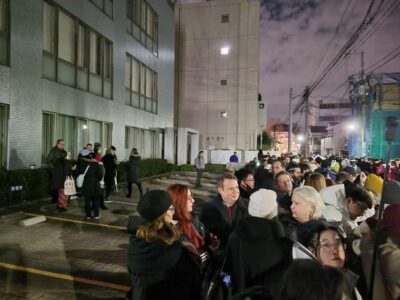
Large public events require a little patience. Keep close to the host, protect your phone and wallet in the crowd, and expect some waiting. If you prefer a quiet New Year’s Eve with a private view, this is not the right format. If you enjoy being near a community celebration and do not mind a crowd, the pageant is the strongest reason to choose this outing.
What $106.74 buys you
The cost is $106.74 per person. That is not a bargain-priced neighborhood walk, but the inclusions are substantial for a three-hour New Year’s Eve program.
Your price covers:
- A Japanese host
- Visits to three local shrines
- Sake brewing instruction
- A tasting of five kinds of sake
- Five kinds of snacks
- Free-flow sake, beer, and other alcoholic drinks for adults
- Soft drinks for participants under the legal drinking age
- Guidance to the fox procession starting point
The value depends on how you use the experience. If you mainly want to watch the procession, you may decide that the included food and drinks are not worth the full price. If you want a structured evening with cultural explanation, food, drinks, and help finding the festival, the package makes more sense.
The operator also handles the transition from the shrines to the izakaya and then to the procession. That removes some planning on a busy holiday night. You still need to confirm the unusual start-time information, but the basic route is easy to understand.
The tour ends back at the meeting point. That is convenient, although the provided details do not say how long the return takes after the final dance or exactly when the group gets back.
Group size, crowd etiquette, and your comfort
The stated maximum is 30 people. That is large enough to create a social evening, but small enough that a host should be able to keep the group together.
However, the only detailed account supplied described a group of more than 50 and called it too large. The concern was not simply inconvenience. The participant felt the group looked disrespectful at the shrines because it occupied too much space and drew attention as it moved through the area.
That criticism deserves serious attention. Religious sites are active places, not just photo stops. If your group is large, listen carefully to the host, stay within the designated areas, keep voices low, and avoid blocking worshippers. The operator says it works with local tourism associations and the organizing committee, which is reassuring, but the actual on-the-ground size still matters.
I would contact OMAKASE before paying and ask two direct questions: Is the group capped at 30 for your date, and what is the confirmed start time? Those answers will tell you much about how smoothly the evening is likely to run.
Who will enjoy this experience most
I would recommend this tour to you if you want a New Year’s Eve with local folklore, shrine visits, Japanese drinks, and a public celebration. It suits first-time visitors who would rather have a host explain the customs than work out the evening alone.
It also fits people who like meeting others over food and drinks. The izakaya stop gives the night a friendly center, while the procession provides a clear climax.
You may want to skip it if you dislike group tours, standing in crowds, or uncertain viewing conditions. It is also a poor match if you want a formal sake class with a detailed brewery focus. The sake segment is educational, but it is part of a wider celebration rather than the entire purpose of the evening.
Families should note that soft drinks are included for participants under the legal drinking age. The available information does not state a minimum age, so check that point if you are booking with children.
Booking, cancellation, and weather details
Confirmation is sent within 48 hours of booking, subject to availability. The experience requires good weather. If poor weather causes cancellation, you are offered another date or a full refund.
You can cancel for a full refund up to 24 hours before the start time. Cancellations or changes made less than 24 hours ahead are not accepted for a refund. Since the date falls around a major holiday and the meeting information contains a time conflict, confirm the details early rather than waiting until the last day.
Should you book the Oji fox celebration?
Book this experience if the fox procession is your main goal and you want help connecting it to shrines, sake, and local custom. The yellow lanterns, fox masks, kimono, and lion dance offer a memorable way to welcome the New Year in Tokyo.
Before booking, confirm the actual start time and the group size. Those are the two details most likely to affect your enjoyment. If the group is truly limited to 30 and the program begins in the evening as described, $106.74 is a reasonable price for the guided visits, included drinks and snacks, and access to the procession starting point.
If you want a small, quiet, private experience, choose something else. If you are happy to share an izakaya table and a crowded public festival, this gives you a lively and distinctly Oji way to start the year.
FAQ
Where does the tour begin?
It begins at the north entrance of JR Oji Station, at 1-chōme-10-18 Ōji, Kita City, Tokyo 114-0002, Japan.
Where does the tour end?
The activity ends back at the meeting point.
How long does the experience last?
The listed duration is approximately three hours.
What is included in the price?
The price includes visits to three local shrines, a host, sake brewing instruction, sake tasting, five kinds of snacks, free-flow alcoholic drinks for adults, and soft drinks for participants under the legal drinking age.
What happens during the fox procession?
You are taken to the starting point of the procession and watch participants carrying yellow lanterns while wearing kimono, fox masks, or fox makeup. Traditional dances, including a lion dance, are also part of the celebration.
Can I cancel for a full refund?
Yes. You can cancel at least 24 hours before the experience start time for a full refund. Cancellations or changes made less than 24 hours before the start time are not accepted for a refund.
Just added around the world
- Würzburg: Brückenschoppen Winter Edition (guided tour with mulled wine)★ 4.7 · 14 reviews
- Würzburg in winter: the Residenz, old town, and mulled wine★ 5.0 · 2 reviews
- Washington, DC: Christmas Tree & Holiday Lights Bus Tour★ 4.5 · 4 reviews
- Windsor, Bath, Stonehenge & Salisbury with Christmas Lunch★ 4.3 · 3 reviews
- Wroclaw: Private 1h Christmas River Cruise★ 5.0 · 2 reviews
- Visit the authentic Christmas market in Obernai★ 3.0 · 3 reviews
- Vienna: Festive Season and New Year’s Eve Waltz Workshop★ 5.0 · 3 reviews
- Wien: Tour with locals on the trails of the Christmas Tree★ 4.6 · 7 reviews
Tokyo Christmas Tours, compared.
Celebrate Unique Japanese New Year Tradition Festivity
Read our review →
Tokyo 2026 New Year Countdown International Party & Cake buffet
Read our review →
Holiday Lights Walk Tour Hibiya Midtown Tokyo Station Marunouchi
Read our review →
Browse the lists this tour appears in