
REVIEW · DRESDEN
Walking Tour of Historic Dresden with a Christmas Touch. Small group tour.
Dresden’s Christmas markets are the finishing touch here, not the main event. The heart of this two-hour walk is the city’s remarkable rise, destruction, and rebuilding, told as you pass the Zwinger, royal buildings, Brühl’s Terrace, and the famous Procession of Princes. You finish near a historic market with time to pursue Stollen and Glühwein on your own.
I like the clear sense of place and the small group limit of 17, which should make it easier to hear the guide. I also like the way the walk links architecture to Dresden’s past, from Renaissance and Baroque splendor through World War II and postwar reconstruction. The main caution is simple: this is a history walk with a Christmas touch, not a long market visit. One unhappy customer found the historical talk too dry and spent only about ten minutes at the Christmas stalls.
Key points at a glance
- Dresden’s story comes first: Learn how the city grew, burned, was destroyed in World War II, and was rebuilt.
- Historic center in two hours: See the Zwinger, Opera House, Royal Cathedral, Palace, Brühl’s Terrace, and Procession of Princes from outside.
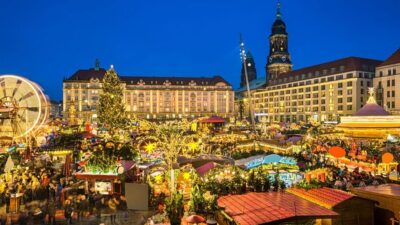
- Christmas market finish: End near Dresden’s Altmarkt and the Striezelmarkt, Germany’s oldest Christmas market, founded in 1434.
- Small group format: The tour accepts no more than 17 people, a useful size for hearing explanations in busy streets.
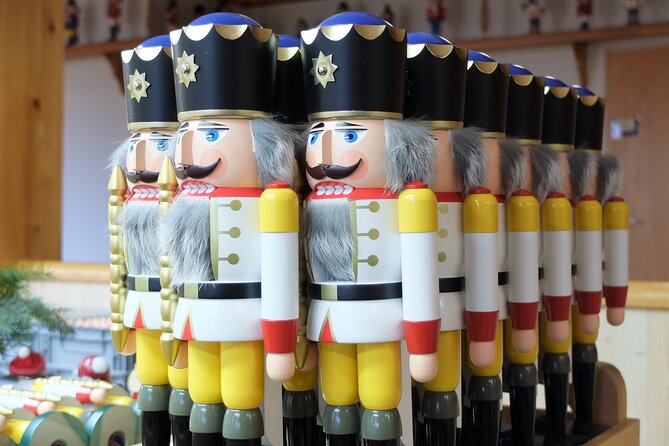
- Local seasonal details: Hear about Dresden Stollen, Glühwein, Nutcrackers, Moravian Stars, and other Saxon traditions.
- No food or drinks included: You pay about $25.35 for the guide and walk, then buy any samples or refreshments yourself.
Dresden’s past is the real subject
Dresden can look almost too polished at first glance. Grand facades line the old center, church towers rise above the squares, and the Elbe gives the city a stately setting. This walk helps you understand that much of what you see is the result of loss, debate, and careful rebuilding.
The historical sweep is broad. You move from medieval Dresden through the Renaissance and Baroque periods, then into the devastation of World War II and the difficult years after it. The guide explains how the city came to be known as the Florence on the Elbe, and why that nickname carries both pride and pain.
That approach is the tour’s strongest feature. You are not simply shown a handsome building and given its construction date. You hear how Dresden developed as a royal center, how its architecture reflected power and wealth, and how war changed the city forever.
Guides such as Lawrence and Karen have been singled out for clear English, warmth, and strong command of the subject. Karen is also described as having an architectural background, which is useful when the walk turns to facades, reconstruction, and the relationship between buildings. Lawrence is praised for fitting centuries of information into one extended walk.
Still, this is not a light stroll with occasional historical trivia. If you prefer a market-first outing, you may find the pace too serious. The guide may spend several minutes on a building or event before moving on, so choose this tour because you want context.
More Christmas Walking Tours in Germany:
- Berlin Christmas Markets Walking Tour
★ 4.5 · 34 reviews - Heidelberg: 1.5-Hour Christmas Market Walking Tour
★ 4.4 · 8 reviews - Munich Christmas Market Private Walking Tour With A Professional Guide
★ 4.5 · 7 reviews
The Zwinger opens the walk
The tour begins at Schlossplatz, or Castle Square, in Dresden’s central old town. From there, you walk through the Zwinger, one of the city’s best-known Baroque complexes. About ten minutes are set aside for this stop, with the guide explaining its history as you move through the grounds.
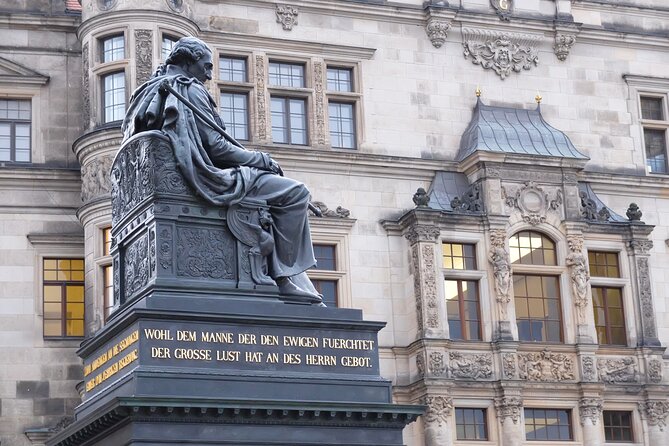
The Zwinger is especially useful as an opening lesson because it shows Dresden at the height of its royal ambition. Its ornate design gives you an immediate sense of the city’s Baroque character, while the story of its destruction and rebuilding brings the larger theme into focus.
You do not pay a separate admission fee for this part of the walk. The experience is based on seeing the exterior spaces and hearing the explanation, not on spending time inside a museum collection.
That distinction matters. Dresden has major museums and galleries, but this tour is designed to orient you before you decide which ones deserve your own time. The guide can point out places worth returning to, yet you will not have a long museum visit built into the two-hour schedule.
Opera, cathedral, and royal power
From the Zwinger, the route continues past the Opera House, Royal Cathedral, Old Masters Gallery, and the royal buildings. These are among the most important sights in the historic center, but the emphasis is on their exteriors.
The guide discusses their architecture, destruction, and reconstruction. This is where the city’s past becomes visible in stone. You can compare grand court buildings with religious architecture and see how Dresden’s central district was shaped by rulers, artists, and church institutions.
The Royal Cathedral, also known as the Catholic Cathedral, is part of the same visual group as the palace and the Procession of Princes. Walking between them gives you a useful sense of how compact Dresden’s historic center is. You are not being bused from sight to sight. The buildings unfold in a connected sequence.
The Old Masters Gallery is viewed from outside on this tour. If art is a priority, make a note of the museum and return later. The same advice applies to the palace museums. The walk gives you orientation and explanation, but admission to those interiors is not included.
The palace courtyard and Renaissance decoration
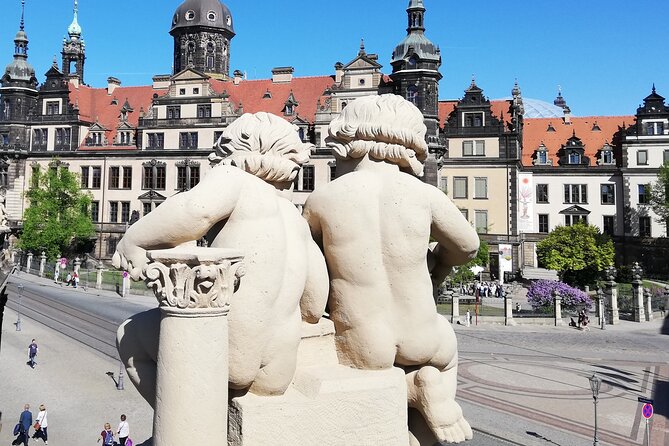
The route may include the large courtyard of the Royal Palace if it is open. This is not guaranteed, so treat it as a possible bonus rather than a promised stop.
The courtyard is worth seeing for its Sgrafitto decoration, a Renaissance technique in which layers of plaster are worked to reveal contrasting patterns. Frescoes add another layer of visual detail. The guide can help you notice why this courtyard is more than a passage between rooms.
You do not go inside the Royal Palace museums as part of the tour. That limitation keeps the walk within its two-hour frame, but it also means you should plan extra time if you want a fuller look at Dresden’s royal collections.
I like this arrangement for a first visit. You get enough information to decide what deserves a second look, without spending the whole afternoon indoors. If museum access is your main goal, however, this is not a substitute for a palace visit.
More History Trips in Germany:
- Historic Christmas tour of Lübeck
★ 4.3 · 47 reviews - Lübeck: Christmas Market and Historical City Tour
★ 4.5 · 2 reviews - Christmas in New York: Private Holiday History Tour
★ 5.0 · 107 reviews - NYC: New Year’s Eve Drinks, History and Ball Drop Tour
★ 3.5 · 11 reviews
The Procession of Princes and Brühl’s Terrace

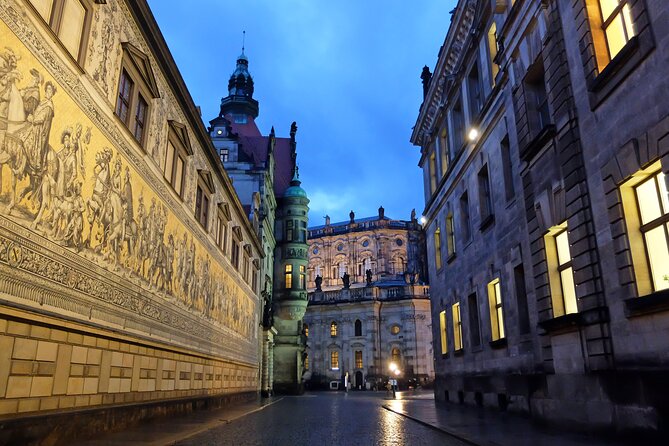
The Procession of Princes is one of the walk’s most memorable outdoor sights. This long decorative mural presents Saxon rulers in a procession, giving the guide a natural place to explain the region’s dynastic past and the way public art can turn history into a grand civic statement.
The route also reaches Brühl’s Terrace, often called the Balcony of Europe. Its position above the Elbe makes it a natural viewing point and a good pause in the walk. The guide explains how it acquired that nickname, while the setting gives you a break from the denser architecture of the old center.
The terrace is also a useful reminder that Dresden is not only a collection of rebuilt monuments. Its riverfront position helped shape the city’s identity, and the view adds space and air to a walk that otherwise stays among stone walls and busy squares.
The route is pedestrian-focused, but you should expect to walk and stand for most of the two hours. There is no suggestion of a long seated break. In Advent, cold rain or damp streets can make the experience feel much longer, so wear shoes with a firm sole and bring a warm waterproof layer.
A short visit to the Striezelmarkt
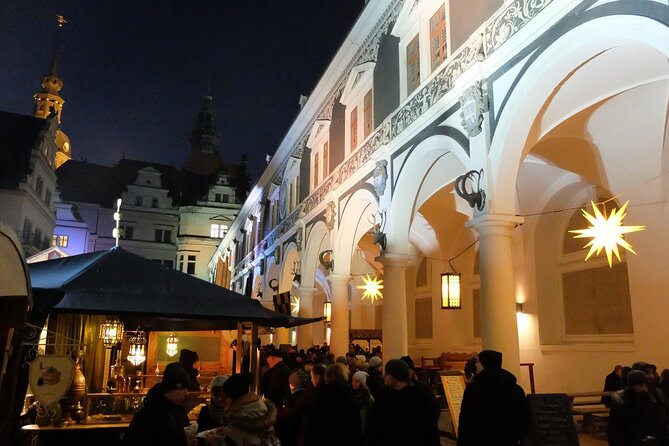
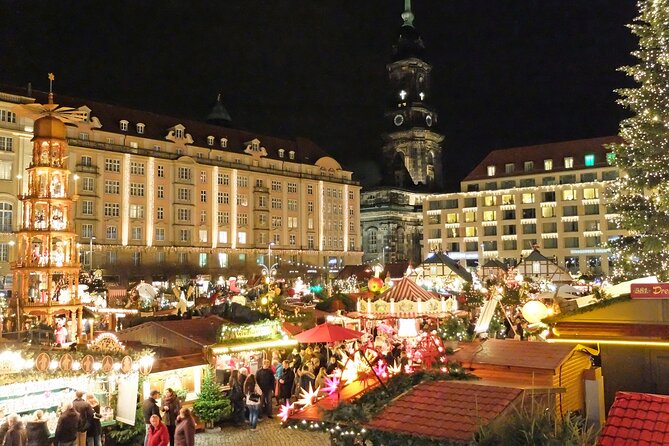
The Christmas portion arrives toward the end, near Dresden’s Altmarkt. The Striezelmarkt has existed since 1434 and is described as Germany’s oldest Christmas market. That age gives the guide plenty of material, especially the story of Dresden Stollen, the dense Christmas cake associated with the city.
You may look for a baker who allows Stollen sampling, but no food is included in the tour. Sampling depends on what is available at the market. The guide explains where to look and discusses local foods, yet you should bring money if you want to eat or drink.
Glühwein is another key subject. You hear about the mulled wine and can then buy a cup yourself after the guided portion. The guide points you toward places for a good seasonal drink, but alcoholic beverages are not included.
This is also the place to watch for Saxon Christmas decorations such as Nutcrackers and Moravian Stars. Those details make the market stop more than a quick photo opportunity. You learn how local objects and food became part of the season’s identity.
Keep your expectations in check. The planned Christmas market section is about 20 minutes, and one account found the actual market time closer to ten minutes. The walk may pass smaller seasonal markets along the way, but it is not built for browsing every stall, comparing crafts, or enjoying a long meal.
The good news is that the tour finishes close to the markets, so you can stay on afterward. You are not rushed onto transport or taken away from the square. Once the guide has finished, you can explore the Striezelmarkt and nearby markets at your own pace.
What the $25.35 price buys you
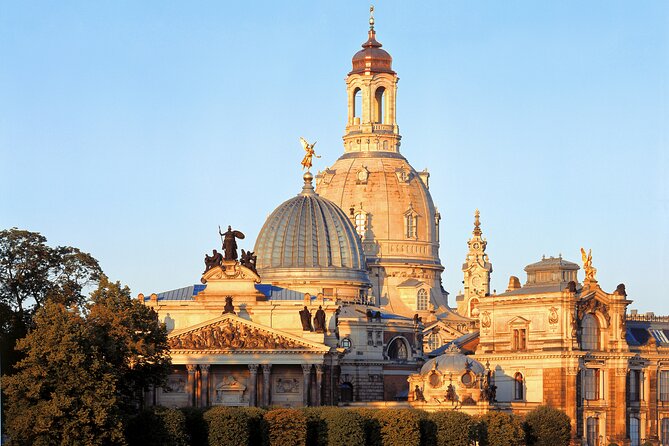
At about $25.35 per person, the price is reasonable if you want a guided introduction to Dresden’s old center in English. You are paying for a compact history lesson, route planning, and a guide who can connect buildings that might otherwise seem unrelated.
The value is strongest on a first visit. In two hours, you get a framework for the city: royal ambition, Baroque design, wartime destruction, reconstruction, and Christmas customs. That framework can make later museum visits and independent walks more meaningful.
The price is less attractive if you mainly want food, shopping, or market time. Nothing to eat or drink is included, and the tour does not give you an extended chance to browse. A self-guided visit to Altmarkt may suit you better if seasonal stalls are your priority.
The maximum group size is 17. That is not a private tour, but it is smaller than a large coach group and should allow questions. Several guides have been praised for answering questions and adjusting to the group, though the experience can still depend on the person leading your departure.
Timing, meeting point, and practical details
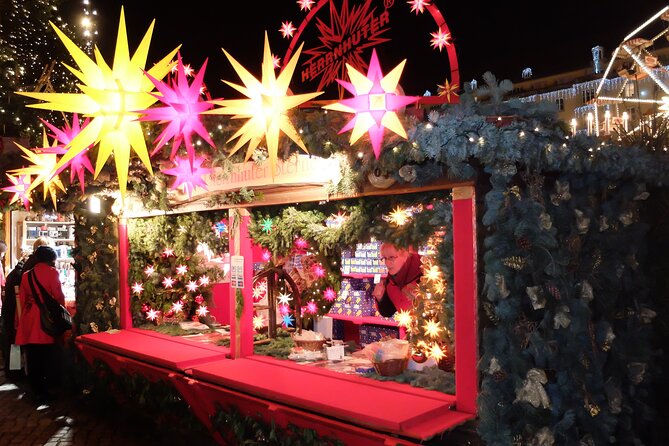
Meet at Schlossplatz, Schloßplatz, 01067 Dresden. The listed end point is Dresden Altmarkt, though the group may finish at another nearby Christmas market. The area around the starting point also has several markets, so you will be well placed for more seasonal exploring afterward.
The tour lasts about two hours. A mobile ticket is provided, and confirmation arrives when you book. The walk is near public transportation, and service animals are allowed. Most people can take part, but you should be ready for outdoor walking and standing in winter weather.
The tour requires a minimum number of participants. If that minimum is not met, the activity may be canceled and you will be offered another date or experience, or a full refund. You can cancel for a full refund up to 24 hours before the start time. Changes or cancellations inside that 24-hour window are not accepted.
Arrive with enough time to find Schlossplatz. One guide was patient when a group arrived late after receiving poor directions from a hotel, but you should not rely on that kindness. In a busy Advent center, a few extra minutes can save stress.
Who will enjoy this Dresden walk
I would choose this tour if you want a clear historical introduction before visiting Dresden’s museums and churches. It also fits well if you prefer a small group, want an English-language guide, and like architecture explained in plain terms.
It suits you especially well if these subjects appeal to you:
- Dresden’s royal and Baroque past
- The destruction and rebuilding of the old center
- Architecture viewed from the street
- Saxon Christmas customs
- Stollen, Glühwein, Nutcrackers, and Moravian Stars
- A short guided walk followed by free market time
I would hesitate if you want a food tour or a full afternoon at the Christmas markets. I would also think twice if standing outside in cold rain sounds miserable. The historical information is the main course, and the Christmas stalls are the dessert.
The strongest guide reports describe enthusiastic, clear, friendly leaders who explain the city in an accessible way. Karen’s architectural background and Lawrence’s broad historical knowledge are useful examples of the kind of guide you may encounter. The less favorable experience points to a real risk: a long chain of facts can feel dry if the guide’s style does not suit you.
Should you book it?
Book this Dresden walking tour if you want the city’s monuments to make sense, not just look pretty in photographs. At $25.35, it offers solid value for a two-hour orientation, especially with a group capped at 17 and a finish near the Christmas markets.
Do not book it expecting a dedicated market crawl. You will get a short seasonal stop, stories about Stollen and local decorations, and directions toward good Glühwein. The main reward is Dresden’s layered story, from royal splendor to wartime ruin and careful rebuilding.
For a first visit in Advent, I would book it early enough to fit a longer independent market visit afterward. That gives you both parts of Dresden’s Christmas season: the explanation, then the freedom to eat, shop, and wander.
FAQ
How long does the Dresden walking tour last?
The tour lasts approximately two hours.
Where does the tour begin?
It begins at Schlossplatz, Schloßpl., 01067 Dresden, Germany.
Where does the tour end?
It is scheduled to end at Dresden Altmarkt, though the guide may finish at another nearby Christmas market.
Is the Christmas market visit the main focus?
No. The walk focuses mainly on Dresden’s history, architecture, destruction, and rebuilding. The Christmas markets provide a seasonal finish.
Is food or Glühwein included?
No. Food, drinks, and alcoholic beverages are not included. You can buy Stollen, Glühwein, and other market treats yourself.
What is the group size?
The tour accepts a maximum of 17 participants.
Just added around Germany
- Würzburg: Brückenschoppen Winter Edition (guided tour with mulled wine)★ 4.7 · 14 reviews
- Würzburg in winter: the Residenz, old town, and mulled wine★ 5.0 · 2 reviews
- Christmas City Nuremberg – Culinary and Tradition★ 4.5 · 10 reviews
- Discover Nuremberg’s Christmas Market Magic with a Local★ 5.0 · 5 reviews
- Munich Christmas Market Tour★ 4.0 · 9 reviews
- Munich Christmas Market Small Group Tour with Gingerbread Heart★ 4.0 · 9 reviews
- Christmas mulled wine tour in Münster★ 5.0 · 3 reviews
- Munich Christmas Market Private Walking Tour With A Professional Guide★ 4.5 · 7 reviews
Dresden Christmas Tours, compared.

Advent Tour with Stollen Tasting and Mulled Wine
Read our review →
Dresden with a touch of Xmas: English small group tour
Read our review →
Christmas Sightseeing Tour with a ‘Pflaumentoffel’
Read our review →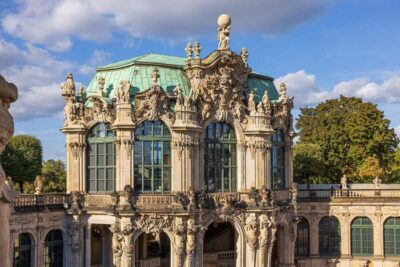


City Tour and Guided Tour in the New Green Vault – Program C – The Festive
Read our review →
Dresden Private Christmas Market Tour With A Professional Guide
Read our review →Browse the lists this tour appears in