
REVIEW · WILLIAMSBURG
Christmas on the Homefront: A 1-Hour World War II Character Tour
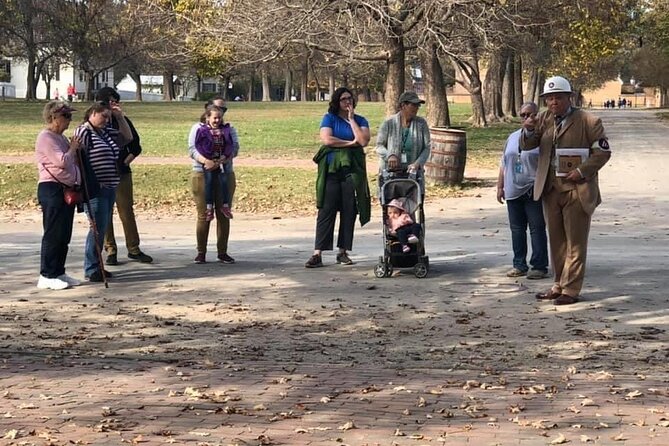
World War II history in Williamsburg is not limited to battlefields and generals. This one-hour walking tour looks at the people who watched the skies, housed troops, supported military families, worked in kitchens, raised funds, and kept soldiers entertained during the Christmas season.
I like the focused route through six recognizable places, and I like the attention given to African American contributions and segregation, a part of wartime history that is too often treated as a footnote. The small replica Christmas card for the troops adds a thoughtful period touch.
The main consideration is pace. Ten minutes at each stop gives you a clear introduction, not a long lesson. Admission tickets are not included at several locations, and the tour requires moderate physical fitness and good weather.
Key points to know before you book
- The route links six Williamsburg landmarks: Bruton Parish Church, the George Wythe House, West Duke of Gloucester Street, the Governor’s Palace, Merchants Square, and the Wren Building.
- The focus is the home front: You learn how local citizens, churches, businesses, schools, and civic groups supported the war.
- African American history receives specific attention: The tour discusses segregation and Lena Richards, whose culinary work at the Travis House is part of the story.
- The Christmas setting matters: Holiday tours, wartime shortages and anxieties, and the meaning of lights out help place Williamsburg in the 1940s.
- This is a private activity: Only your group participates, which allows the guide to keep the conversation centered on your interests.
- A replica World War II Christmas card is included: It gives you a small physical reminder of the people serving far from home.
Seeing Williamsburg through the wartime home front
Colonial Williamsburg usually brings the 18th century to mind. This tour asks you to look at the same streets through a 1940s lens, when the United States was fighting World War II and Williamsburg was connected to the military effort in less obvious ways.
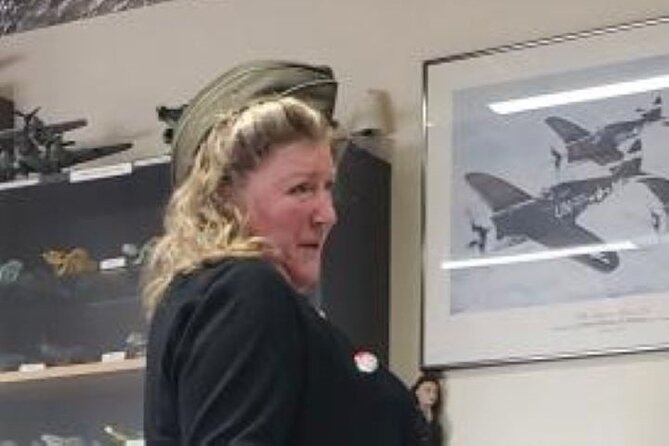
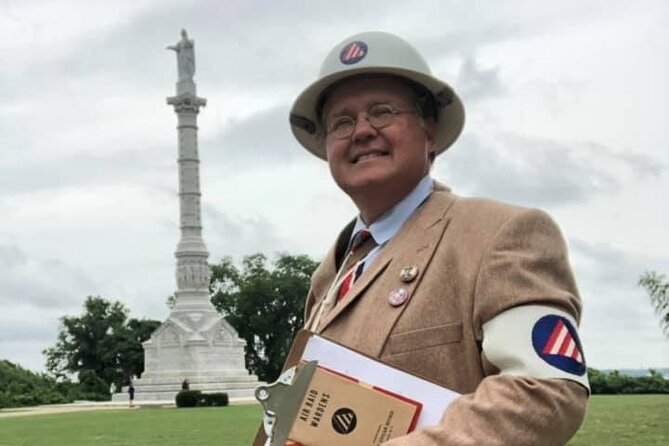
You will not spend the hour examining weapons, battle maps, or famous commanders. Instead, the guide explains how ordinary places took on wartime jobs. A church could help house troops or serve as a lookout for aircraft. A college could offer lodging to military spouses and provide young women for USO work. A public street could raise questions about segregation, labor, food, and community life.
That approach gives the tour a human scale. I like it because it turns familiar buildings into evidence of how a town responded to a national crisis. It also makes the Christmas theme more meaningful. The season was not simply a backdrop for decorations. It was a time when families were separated, soldiers needed support, and daily routines were shaped by military demands.
Because the tour lasts about an hour, you get a brisk sequence of ten-minute stops. That is useful if you want a short historical activity between other plans. It also means you should not expect a full treatment of every subject. The guide has to make each stop count.
A few more festive trips around the USA worth a look
- 1 Hour Christmastide Walking Tour in Virginia Past and Present
★ 4.0 · 5 reviews - 1 hour City Tour & Butchart Gardens: Christmas – Entry included!
★ 5.0 · 5 reviews - Wroclaw: Private 1h Christmas River Cruise
★ 5.0 · 2 reviews
Bruton Parish Church and the work of watching the skies
The tour begins at Bruton Parish Episcopal Church, at 201 West Duke of Gloucester Street. Here, the guide discusses the roles of churches and other organizations during the war, along with the part played by Williamsburg citizens.
One of the most interesting points is the use of local places for practical military needs. Churches and community organizations helped house troops, while citizens took part in observation work to spot planes. That detail shifts your attention from the battlefield to the responsibilities that reached into town life.
I find this a strong opening because it establishes the main idea early: wartime support was not confined to military bases. A familiar church could be tied to troop movements and civil defense. The first ten-minute stop also helps you understand what to watch for during the rest of the walk.
The ticket information lists admission as not included at this stop. If the tour enters any location rather than discussing it from outside, you should confirm the access arrangements before booking. The tour data does not promise interior admission, so do not assume that the one-hour experience includes every building interior.
The George Wythe House and Colonial Williamsburg’s wartime purpose
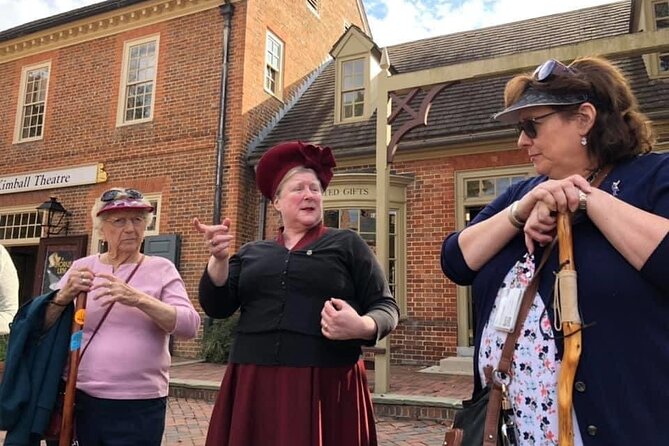
At the George Wythe House, the guide turns to the origins of the Colonial Williamsburg Foundation and its commitment to the military. The discussion includes classes offered to military personnel on the subject of liberty.
This is an important connection. Colonial Williamsburg was not only preserving buildings for visitors. During the war, its educational mission could also serve people in uniform by placing military service within a larger conversation about government, rights, and civic responsibility.
The subject fits the setting well. The George Wythe House is associated with the founding era, while the wartime discussion asks how ideas from that earlier period were presented to soldiers in the 1940s. You get a sense of how Williamsburg used the past to speak to a current national emergency.
Again, the stop is limited to about ten minutes, with admission not included. I would treat it as a focused talk rather than a full house tour. If you are hoping to spend time studying the building itself, plan a separate visit or check the admission requirements for the day you go.
West Duke of Gloucester Street and the Black wartime experience
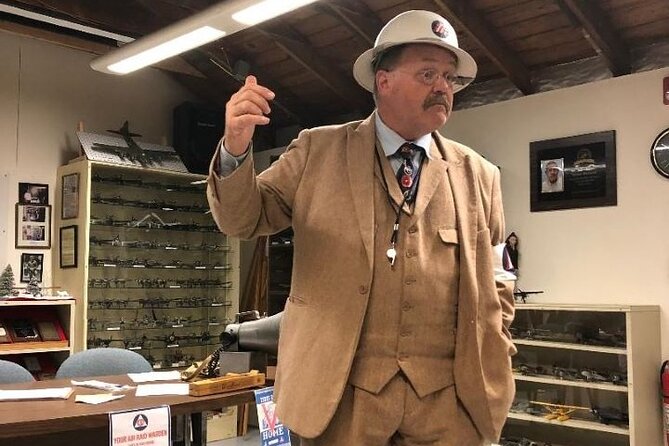
In front of the Custis Tenement on West Duke of Gloucester Street, the tour addresses segregation and the contributions of Williamsburg’s African American community during World War II.
This may be the most important stop for many people. Wartime unity did not erase racial discrimination. The tour places military service and home-front labor alongside the unequal treatment that shaped daily life. That gives you a more honest picture than a simple story of everyone pulling together without conflict.
The stop also includes Lena Richards and her culinary talents at the Travis House. Her story brings the subject down to a personal and practical level. Food service, cooking, and hospitality were forms of labor that helped keep institutions functioning, even when the most visible wartime stories focused on combat or factory work.
I appreciate that this is not presented as a vague statement about community contributions. The mention of a specific person and workplace gives the guide something concrete to explain. It also helps you think about the many kinds of work required during wartime.
This stop is listed as free, while the surrounding route may involve locations with separate admission policies. It takes about ten minutes and remains outdoors according to the meeting point details. The tour requires moderate physical fitness, so wear shoes suitable for walking on historic streets and paths.
Same city, a different kind of Christmas evening:
- From Manhattan: 4-Hour Dyker Heights Holiday Lights Bus Tour
★ 4.6 · 2,426 reviews - NYC: Dyker Heights Christmas Lights & Skyline View Bus Tour
★ 4.7 · 1,192 reviews - Dyker Heights Christmas Lights Guided Tour
★ 4.5 · 920 reviews - New York City: Dyker Heights Christmas Lights Tour
★ 4.4 · 838 reviews
The Governor’s Palace and Christmas under wartime rules
At the Governor’s Palace, the guide explores how the war affected Williamsburg citizens, with special attention to holiday tours and the meaning of lights out.
The phrase lights out carries practical weight here. During wartime, reducing visible light could be part of efforts to make it harder for aircraft or enemy forces to identify targets. Even without a battlefield nearby, people could be asked to change how they used their homes, streets, and public places.
The holiday angle adds another layer. Christmas tours continued, but the season existed alongside military service, uncertainty, and restrictions. The story is not just about festive atmosphere. It is about how a community tried to maintain familiar traditions during a period when normal life had been interrupted.
This stop should appeal to you if you like social history. The guide is not simply pointing out a grand building. The discussion asks what the war felt like for residents and how public celebrations fit into that experience.
Admission is not included at the Governor’s Palace. The available information does not specify whether your group enters the palace, so clarify that point if interior access matters to you. The scheduled discussion lasts roughly ten minutes.
Merchants Square, movies, and the USO
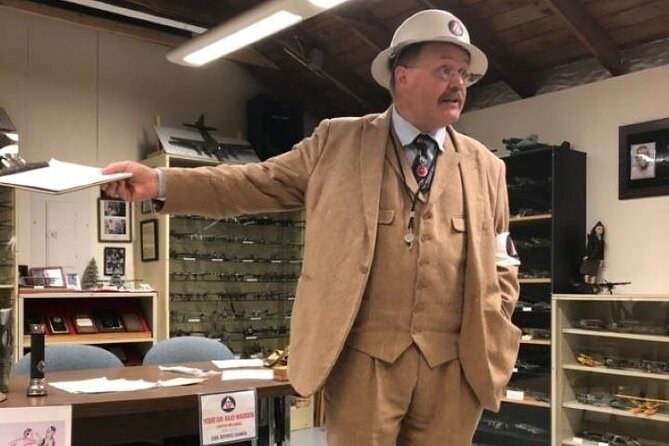
The route continues to Colonial Williamsburg’s Merchants Square, where the subject shifts to entertainment for soldiers in Williamsburg. The guide discusses movies and the United Service Organizations, better known as the USO.
This stop reminds you that rest and recreation were part of military support. Soldiers needed places to spend free time, see films, and take part in organized entertainment. The USO helped connect service members with activities and social contact, particularly when they were away from home.
For a Christmas-themed tour, this is a useful change of pace. The earlier stops focus on observation, education, civil defense, and social inequality. Merchants Square shows how a town also provided relief from military routine.
The value here is in the local setting. Instead of treating the USO as an abstract national program, the guide connects it to the places where soldiers actually spent time. You can picture the wartime town as a working community with shops, public spaces, and entertainment shaped by the military presence.
Admission is not included at this stop. The tour information does not list a separate movie or performance as part of the activity, so you should expect historical discussion rather than a staged entertainment program. The scheduled time is about ten minutes.
The Wren Building and William and Mary’s wartime role
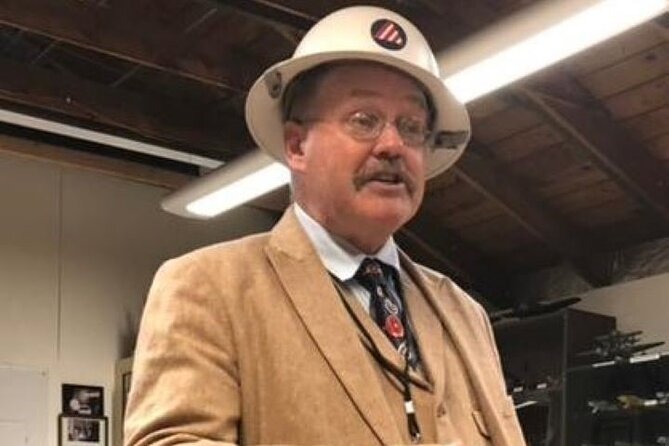
The final stop is the Wren Building on the campus of the College of William and Mary. The tour ends in front of the building, at 111 Jamestown Road.
Here, the guide explains how the college supported the war effort. The subjects include housing for military spouses, holiday fund drives, and the provision of junior hostesses for the USO.
These details show how a college campus could become part of the wider military support system. Housing military spouses recognized that service affected families as well as enlisted personnel. Holiday fund drives connected the campus to wartime giving, while junior hostesses helped provide social activities for soldiers.
I like this as the closing stop because it gathers several themes from the walk: education, family support, fundraising, and recreation. The Wren Building also gives the tour a clear endpoint rather than leaving you somewhere in the middle of the historic district.
Admission is not included at this stop. The tour ends outside the building, according to the stated endpoint, so you should not count on an interior visit as part of the experience.
What the private format changes
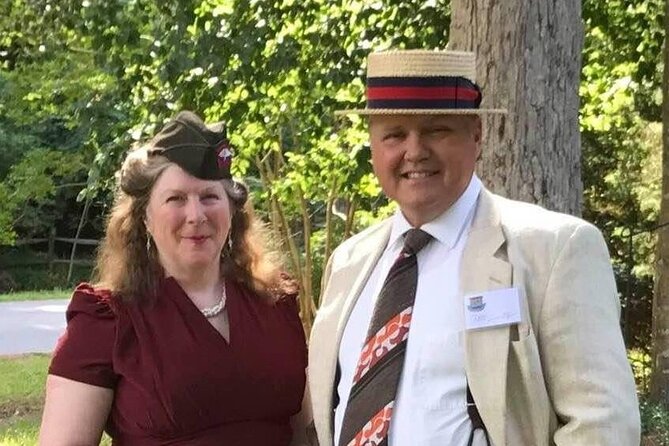
This is a private tour, so only your group participates. That can make a real difference in a one-hour experience. A small party can ask about a particular topic, such as segregation, the USO, Colonial Williamsburg’s military work, or the Christmas setting, without competing with a large crowd.
The private format may also help the guide adjust the level of detail. If your group already knows the basics of World War II, you can focus on Williamsburg. If the subject is new to you, you can ask for more context.
The tradeoff is that a private tour usually gives you less of a built-in social atmosphere than a larger group activity. The available information does not provide the guide’s name, group size limit, or a detailed script, so you should ask those questions if they matter to your booking decision.
The tour is offered in English, and a mobile ticket is available. Service animals are allowed. The route is not described as fully accessible, and moderate physical fitness is required, so contact the provider if you have concerns about walking or surfaces.
Is the one-hour format worth your time?
No price is provided here, so I cannot judge the exact cost. I can still explain what you are paying for: a private, guide-led interpretation of six places, a focused World War II theme, and a small period-inspired keepsake.
The value is strongest if you want a short, specialized experience rather than a broad Colonial Williamsburg introduction. You are paying for the guide’s connections between places that might otherwise seem unrelated. A church, historic house, street, palace, shopping area, and college building become parts of one wartime story.
The value is weaker if you want long interior visits or a full-day history program. Ten minutes per stop is enough for a clear explanation, but not enough for extended exhibits, detailed architectural study, or lengthy discussion.
You should also remember that admission is not included at several stops. Any separate entry fees could affect the total cost of your day. Ask what the walking tour itself includes and what you would need to pay for separately.
The cancellation terms are flexible if your plans change early. You can cancel for a full refund up to 24 hours before the start time. Changes made inside that period are not accepted, and poor weather can lead to a different date or a full refund. That matters because this is an outdoor walking experience.
Who will get the most from this Williamsburg tour?
I would recommend it to you if you enjoy local history, World War II, museum-style interpretation, or stories about civilians rather than only military leaders. It is also a good fit for someone who has already seen the main Colonial Williamsburg sights and wants a different period and theme.
Families may appreciate the short length, though the subject of segregation and wartime restrictions requires room for serious discussion. The private format lets you decide how much to ask and where to spend your attention.
It is especially well suited to visitors interested in the role of women, African American workers, churches, colleges, and civic groups. Lena Richards, military spouses, junior hostesses, fund drives, and plane spotting all widen the definition of wartime service.
I would be more cautious about booking if you dislike outdoor walking, need guaranteed interior access, or want a performance-based Christmas activity. This is a history talk along a route, not a dinner, concert, or theatrical show.
Should you book Christmas on the Homefront?
Book it if you want to see Williamsburg as a working wartime community rather than only as an 18th-century restoration. The strongest reasons are the specific local details, the attention to African American contributions, and the way the Christmas theme connects military service with ordinary routines.
Skip it if you need a longer tour, included admission to every landmark, or a fully documented schedule of interiors and guide details. For everyone else, this compact private walk offers a thoughtful way to spend an hour, especially when you want history that reaches beyond famous names and battlefields.
FAQ
How long is the tour?
The tour lasts approximately one hour, with about ten minutes scheduled at each of six stops.
Where does the tour begin?
It begins at Bruton Parish Episcopal Church, 201 West Duke of Gloucester Street, Williamsburg, Virginia 23185.
Where does the tour end?
It ends in front of the Wren Building on the campus of the College of William and Mary, at 111 Jamestown Road.
Is the tour conducted in English?
Yes. The experience is offered in English.
Is this a private tour?
Yes. Only your group participates in the activity.
Is admission to the historic sites included?
Admission is listed as not included at Bruton Parish Episcopal Church, the George Wythe House, the Governor’s Palace, Merchants Square, and the Wren Building. The West Duke of Gloucester Street stop lists admission as free.
What is included with the tour?
You receive a replica World War II Christmas card made for the troops.
Just added around the USA
- Washington, DC: Christmas Tree & Holiday Lights Bus Tour★ 4.5 · 4 reviews
- Downtown DC Holiday Tour: Lights, Decorations & Festive Cheer★ 5.0 · 3 reviews
- St. Louis Private Christmas Spectacular Tour★ 3.5 · 5 reviews
- Leavenworth Christmas Lights Tour from Seattle★ 4.0 · 7 reviews
- Totally Made-Up Hallmark Christmas Movie★ 5.0 · 5 reviews
- Festive Flavors of Pike Place Market Holiday Food Tour★ 5.0 · 5 reviews
- San Diego Holiday Lights Talking GoCar Tour★ 5.0 · 2 reviews
- Christmas Carol Trolley Holiday Music & Lights Tour in Sarasota★ 5.0 · 8 reviews
Williamsburg Christmas Tours, compared.
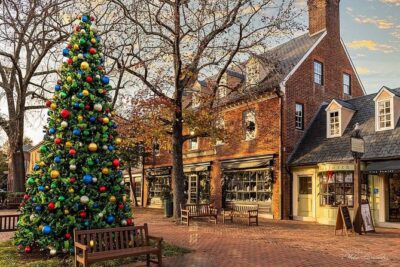
Private Colonial Williamsburg Christmas Holiday Decorations Walking Tour
Read our review →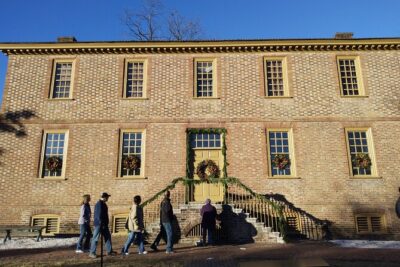
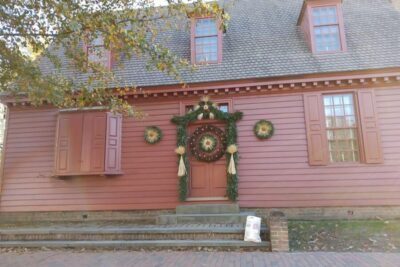

1 Hour Christmastide Walking Tour in Virginia Past and Present
Read our review →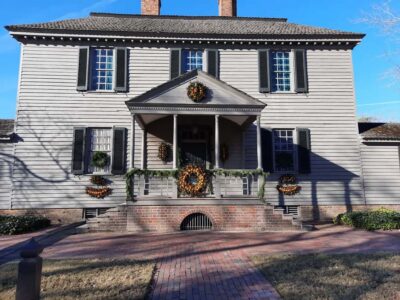
Browse the lists this tour appears in